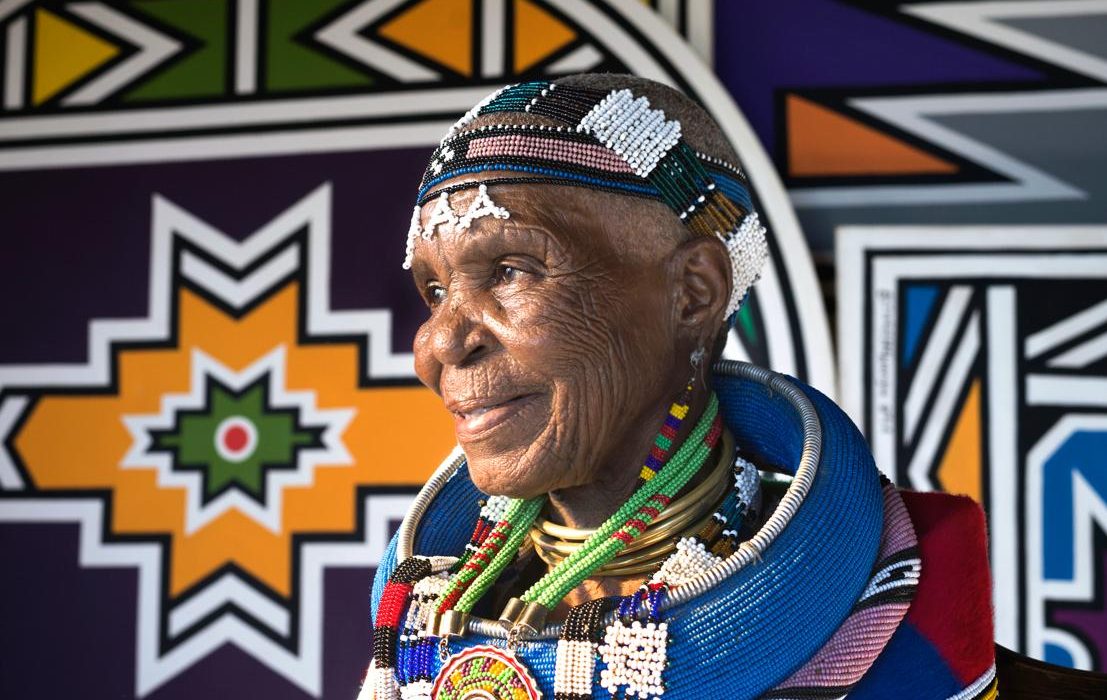
From Ndebele-inspired patterns to a BMW Art Car and now an AI-powered digital retrospective, South African art legend Dr Esther Mahlangu is proving that great art has no age limit, borders or boundaries.
Some people leave a mark. Others turn that mark into a global movement. Dr Esther Mahlangu has been doing just that for decades, and at 91, the legendary South African artist is showing no signs of slowing down.
In a fitting birthday celebration, Google Arts & Culture has launched its most comprehensive online retrospective of Mahlangu’s life and work to date. Unveiled on 11 November 2026, the artist’s 91st birthday, the digital experience brings together more than 45 stories exploring her remarkable journey, artistic legacy and influence on the global art scene.
And if you thought you knew everything about Mama Esther, think again!
From village walls to the world stage
For many South Africans, Mahlangu’s distinctive geometric patterns and vibrant colours are instantly recognisable. Rooted in the traditional Ndebele art of decorating homes, her work has travelled far beyond the walls of her community to some of the world’s most prestigious art and design platforms.
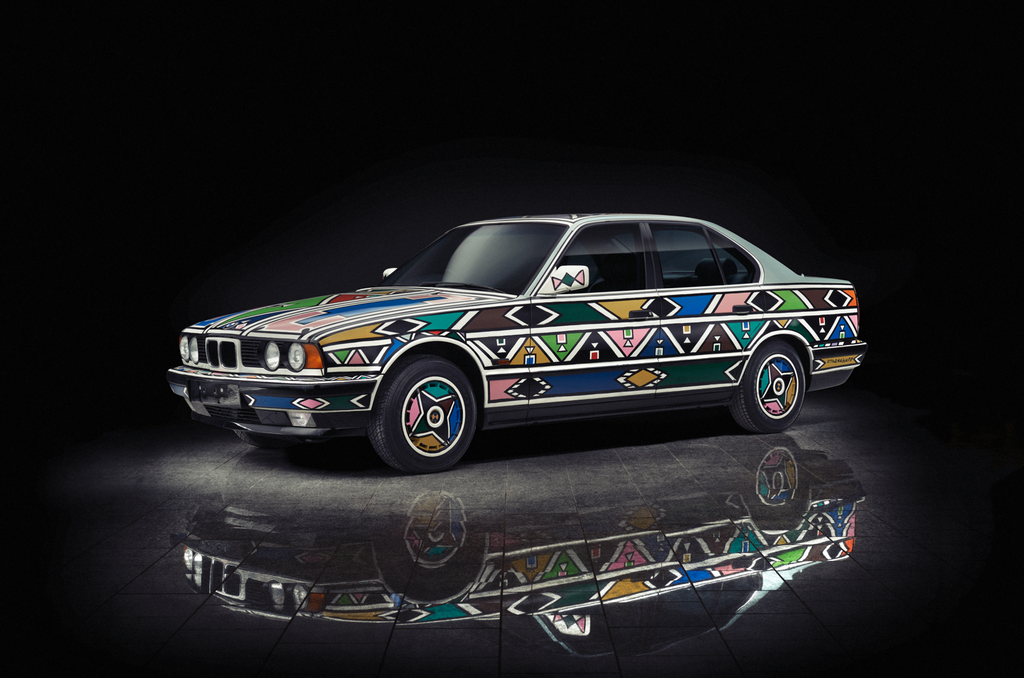
One of the defining moments in her career came in 1991 when she became the first African artist and first woman to design a BMW Art Car. Her canvas? A BMW 525i.
Taking the bold patterns and colours associated with Ndebele mural painting and applying them to the vehicle, Mahlangu transformed an automobile into a moving work of cultural expression. Remarkably, she completed the artwork in just one week!
The BMW 525i became the 12th addition to the prestigious BMW Art Car Collection, which began in 1975 and now features 20 vehicles designed by internationally celebrated artists, including Andy Warhol, Roy Lichtenstein and Julie Mehretu.
While Mahlangu’s Art Car was created exclusively for exhibition purposes and has never been driven on the road or in a race, its impact has travelled around the world. It remains a powerful example of how African cultural heritage can occupy space in unexpected places.
More than just a pretty paint job
Mahlangu’s relationship with the automotive world didn’t end with the BMW 525i. Over the years, her artistic signature has found its way into some seriously impressive spaces.
In 2016, she brought her distinctive style to the interior wood trims of a BMW Individual 7 Series, unveiled at Frieze London and later auctioned for charity. In 2020, Rolls-Royce commissioned her to create an artwork for the Gallery of a Phantom, aptly named The Mahlangu Phantom.
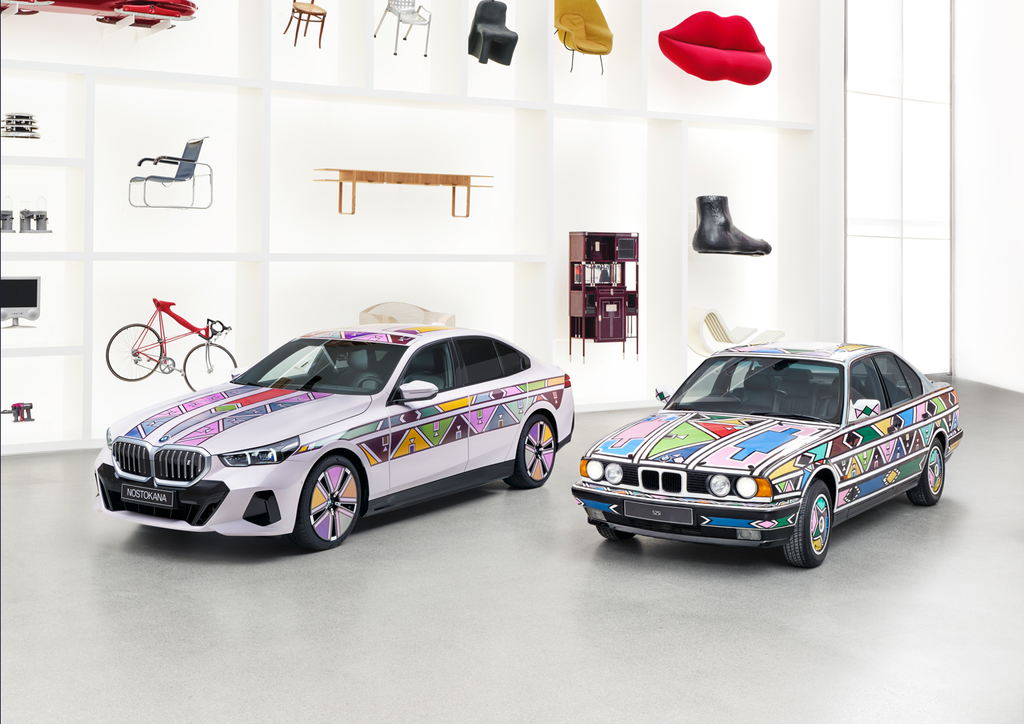
She also designed a commemorative logo for BMW Group South Africa’s 50th anniversary in 2023. That same year, her designs met artificial intelligence through The Electric AI Canvas, a project that projected AI-generated animations of her patterns onto the all-electric BMW i5.
In 2024, technology took things a step further, with colour-changing E Ink technology bringing her signature patterns to life across the BMW i5 NOSTOKANA.
Talk about taking traditional art into the future!
What happens when technology meets memory?
Perhaps one of the most fascinating elements of the new retrospective is how it uses technology to tell stories that might otherwise have been lost.
Mahlangu’s surviving archive has limited documentation of her life before 1980. To help fill this gap, Google Arts & Culture collaborated with Google DeepMind and creative technology studio Domestic Data Streamers to reconstruct selected childhood memories using artificial intelligence.
Through interviews and archival research, the team created visual interpretations of memories from her early life and artistic development.
One particularly special recollection takes us back to when a young Esther, aged just ten, discovered her artistic talent while painting with feathers instead of a traditional brush.
Using AI-generated still images and Google’s Veo video model, these memories have been transformed into moving sequences, offering audiences a glimpse into the experiences that helped shape one of South Africa’s most celebrated artists.
Importantly, these are artistic reconstructions rather than original historical footage. They demonstrate how emerging technology can help preserve cultural memory while giving new generations a different way to connect with the past.
A legacy worth exploring
The retrospective is a substantial digital collection, featuring more than 700 archival photographs, over 100 high-resolution images of artworks, expert-curated exhibitions and virtual Street View experiences.
It also offers audiences an opportunity to revisit Mahlangu’s 2024 exhibition, Then I knew I was good at painting, at the Iziko South African National Gallery in Cape Town, curated by Nontobeko Ntombela.
For art lovers, culture enthusiasts and anyone interested in the stories behind the people shaping South Africa’s creative landscape, this is an opportunity to explore an extraordinary body of work from a fresh perspective.
More importantly, Mahlangu’s story is a reminder that our cultural heritage is not something to leave behind as we move forward. It is something we can carry, reinterpret and share with the world.
At 91, Mama Esther continues to challenge the idea of where African art belongs, what traditional creativity can look like and how far an artist’s imagination can travel.
And if her journey has taught us anything, it’s that you don’t have to change your roots to reach the world. Sometimes, you simply have to paint them a little bigger.
Want to take a closer look?
Explore Esther Mahlangu’s digital retrospective on Google Arts & Culture HERE!