

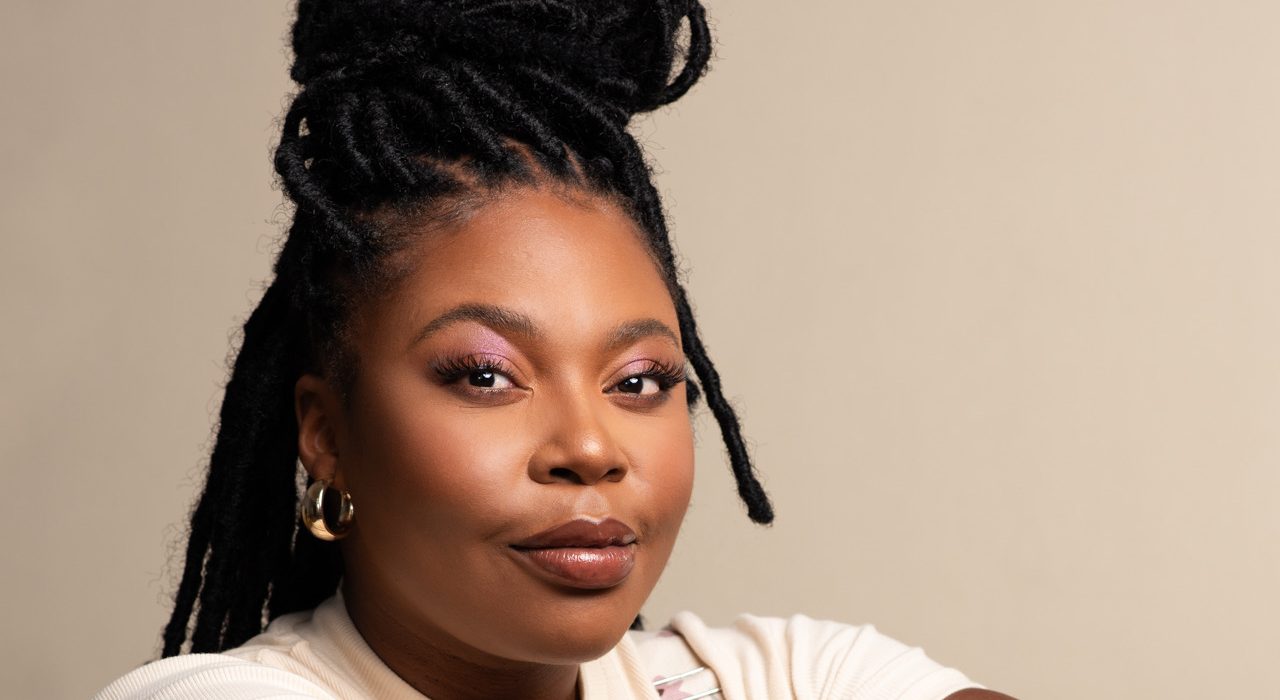
The first time Lerato Sokhulu felt she belonged on stage; she wasn’t holding a mic at a comedy club. She was MCing a film festival when Kagiso Lediga and Dr John Kani pulled her aside. “They told me I should quit my day job because I belonged on stage,” she says. “That gave me the biggest validation. It set the tone before I even started doing comedy.”
Today, Sokhulu is one of South Africa’s few Black female stand-up comedians. She’s currently touring her first solo show, WTF HAPPENED TO MY KNEES, directed by Loyiso Gola. The show marks a new chapter: “It’s my first solo, so I’m learning a lot about putting a show together and touring,” she says. “Having it directed by Loyiso has been the most surprising moment. He’s helped me become more nuanced in my storytelling and taught me how to relax on stage.”
The Funny Kid Who Listened To Her Soul
Sokhulu didn’t plan on comedy. “I’ve always been the funny kid in class saying the most outlandish things and finding humour in everything,” she says. The switch flipped when she went to watch a comedy show. “I felt it in my soul that that’s what I wanted to do.”
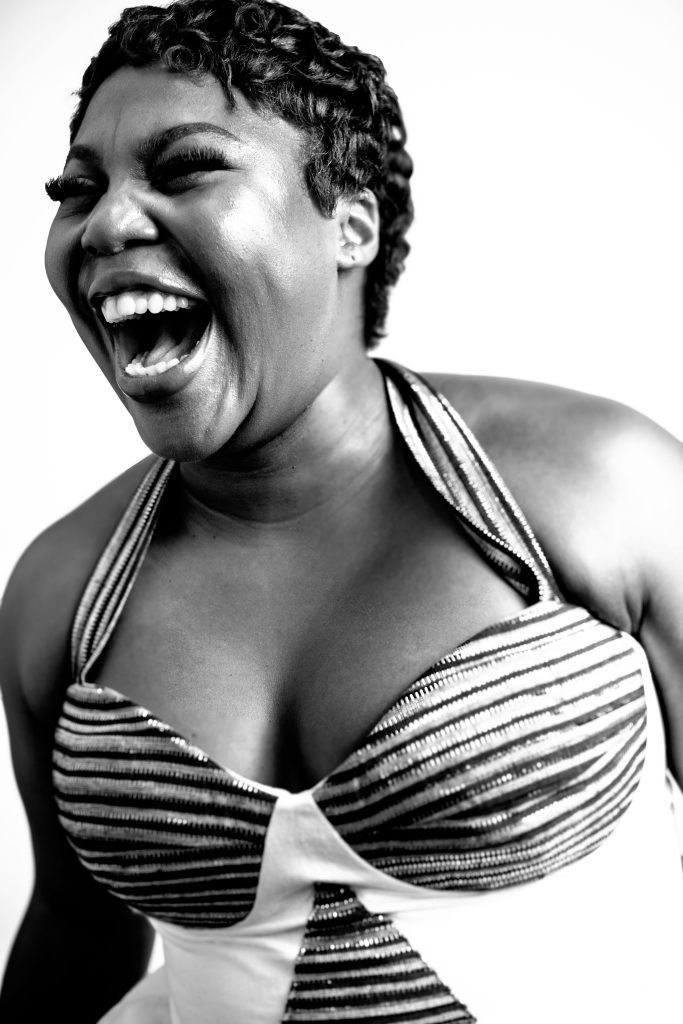
Her approach to identity is just as direct. Asked how her experiences as a Black woman influenced her humor, she doesn’t overthink it. “I experience everything as a human first, then a Black woman. So, life influences my humor.” She pushes back on the idea that being a Black female comic automatically gives her a unique stage perspective. “No, I don’t. Comedy is about comedy. You’re either funny or you’re not.”
That doesn’t mean she avoids hard topics. “My comedy is satirical and observational, so I make fun of serious things,” she explains. “It’s not something I have to think about deeply. And that’s the job of a comedian, to make something humorous to either shed light on an issue, debate about it or laugh because it feels good.”
No Barriers, Just Work
Sokhulu also resists the “barrier-breaker” label often placed on women in male-dominated spaces.“I don’t think there are barriers in comedy. Not for me anyway. I have felt incredibly supported throughout my journey.”
Still, she’s aware the landscape is shifting. “There are definitely more of us now and it’s wonderful to watch because everyone is so different,” she says of Black women in SA comedy. Her own influences span generations: Kagiso Lediga for his writing, Celeste Ntuli for her fearlessness, the comics from Pure Monate Show who “raised” her, and American greats like Katt Williams, Bernie Mac, and Monique. “I used to watch their specials over and over again without knowing I would one day be a comedian.”
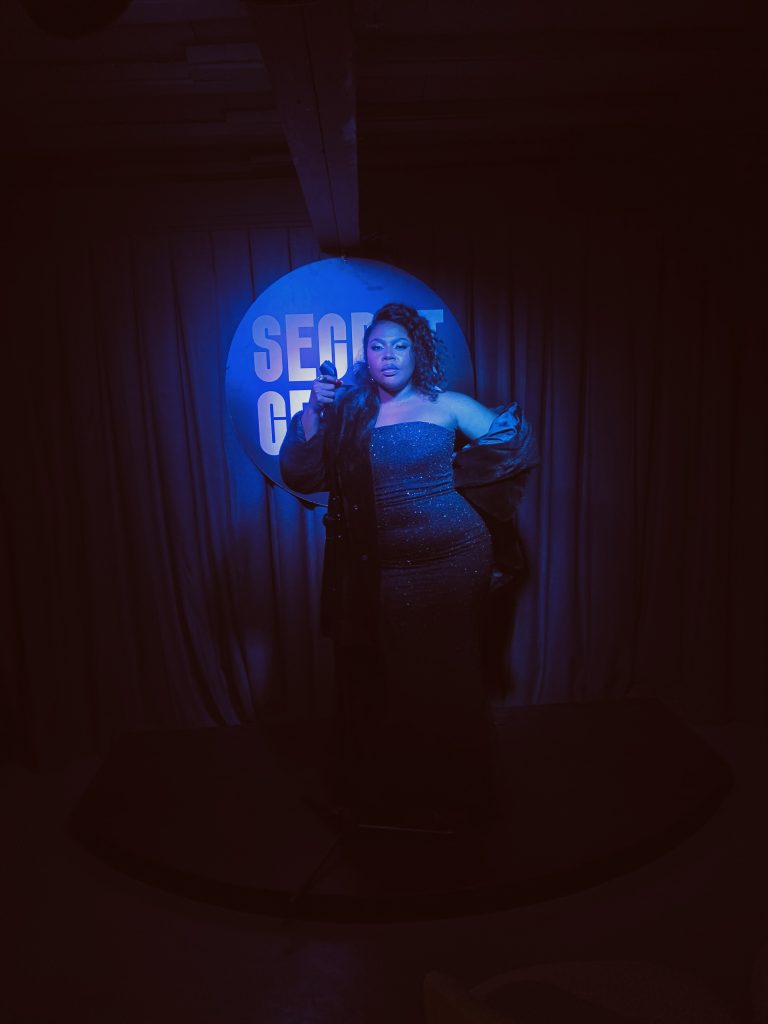
The Process: Living Life, Writing Late
A typical show day for Sokhulu is calm. “I get distracted easily so I don’t like to be over-stimulated. I go through my set in my head at different points of the day, then write it out about two hours before the show.”
Material comes from everywhere. “By living life. Things are always happening around me that I find interesting and I’m always joking around. Sometimes the things that annoy me turn into jokes. Sometimes I catch myself having a conversation and an observational thought or memory comes to me that I want to expand on.” Family is a constant source, especially her grandmother and paternal family. “My paternal family intrigues me so much. They are the most unique people I’ve ever met. Most times I’m just expanding a joke that I already have.”
On stage, she zones in. “When I’m on stage, I’m totally zoned in, and if you don’t find me funny that’s fine too. I’m not for everyone and that’s okay.” Hecklers get handled based on mood. “I have chased someone out of the room because they were rude, but most times I just make fun of them and they stop heckling.”
The Jokes That Land
What always works? “Definitely my broke jokes. You would have to watch it live or online,” she laughs. “But I think, especially for over 30 people, there’s a lot of shame about being broke and not having life figured out.” The common thread in audience feedback is relatability. “People always relate to what I say because they are having a human experience too. Some think I’m braved to say what I say.”
Advice For The Next Ones Up
For aspiring Black women comics, her advice is simple: “Do it even when you feel scared.”
A post shared by Lerato Sokhulu (@rapunzulu)
Sokhulu isn’t interested in being a symbol. She’s interested in being funny. And with WTF HAPPENED TO MY KNEES on the road, and with Gola in her corner, she’s doing exactly that. One set, one story, one punchline at a time.